

Environmental impacts of oil spills and fires

By Gino Sabatini, Associate Director

19 March 2026 


In 2001, I led a team of specialists conducting an extensive environment impact assessment of the effects of large-scale crude oil spills and well fires resulting from the First Gulf War. My company at the time had been commissioned by the Ministry of the Environment of Saudi Arabia after the United Nations Compensation Commission (UNCC) awarded the Kingdom 121 Million USD to assess the extent of the environmental damage caused by the oil spills.

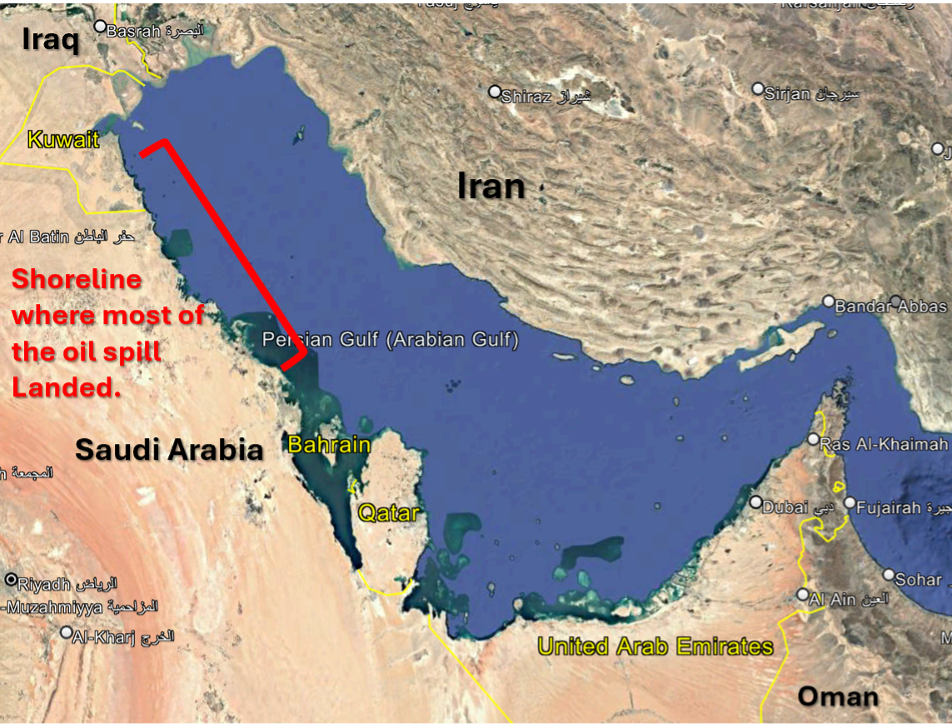
During the final stages of the First Gulf War (1990-1991) approximately 700 Kuwaiti oil wells were deliberately set on fire, causing the largest oil spill in history up to that point. The oil contaminated the marine waters of the NW Arabian Gulf and an extensive area of the Saudi shoreline (shown below). 


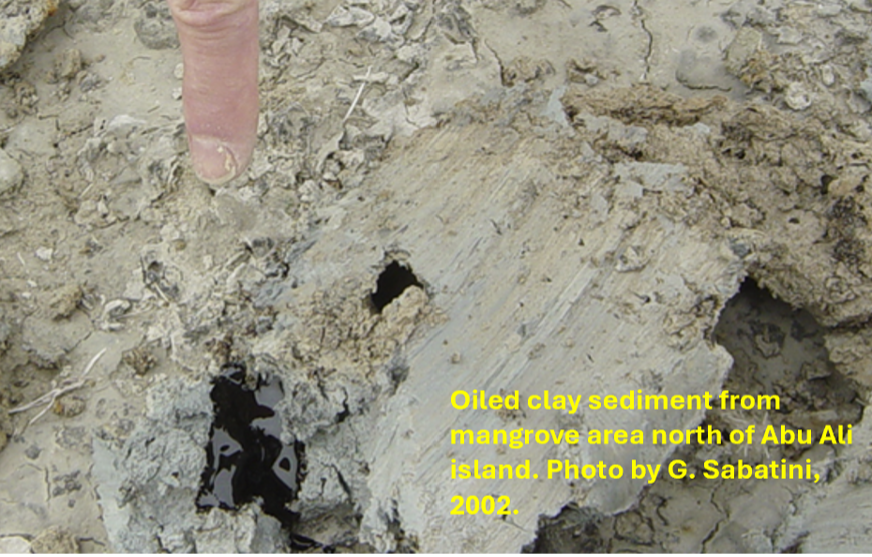
I was the Marine & Coastal Manager overseeing a study to ascertain the adverse long-term impacts of the oil spills on sensitive environmental receptors, including coastal and marine habitats, fisheries and coral reefs. The result of our surveys showed that oil was still present in the sediment all the way from Damman (Saudi Arabia) to areas beyond the Kuwait border. Oil was present on all shoreline types: sandy beaches, rocky beaches, tidal mudflats, mangroves and salt marshes. Even liquid oil was still present, especially in mangrove, salt marsh, mudflat, and some fine-grained sand beaches as shown in the following photo:


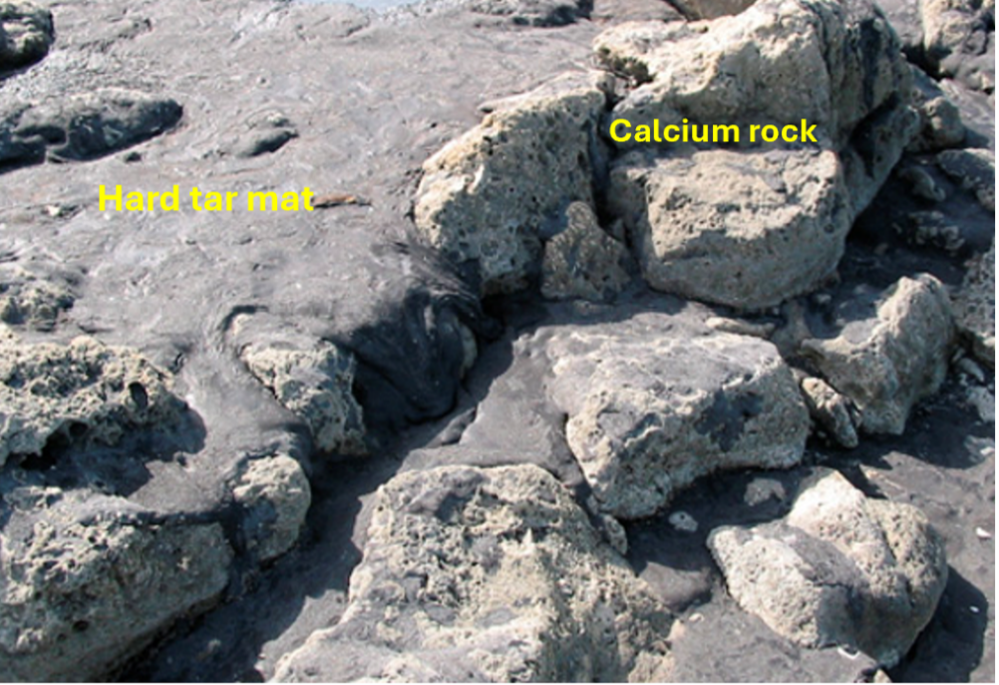
On rocky beaches the oil had dried to a consistency equivalent to asphalt (tar mats) as shown below:


Dried oil on rocks - appearing a tar mat on a beach north of Abu Ali island. Photo by Gino Sabatini, 2002.


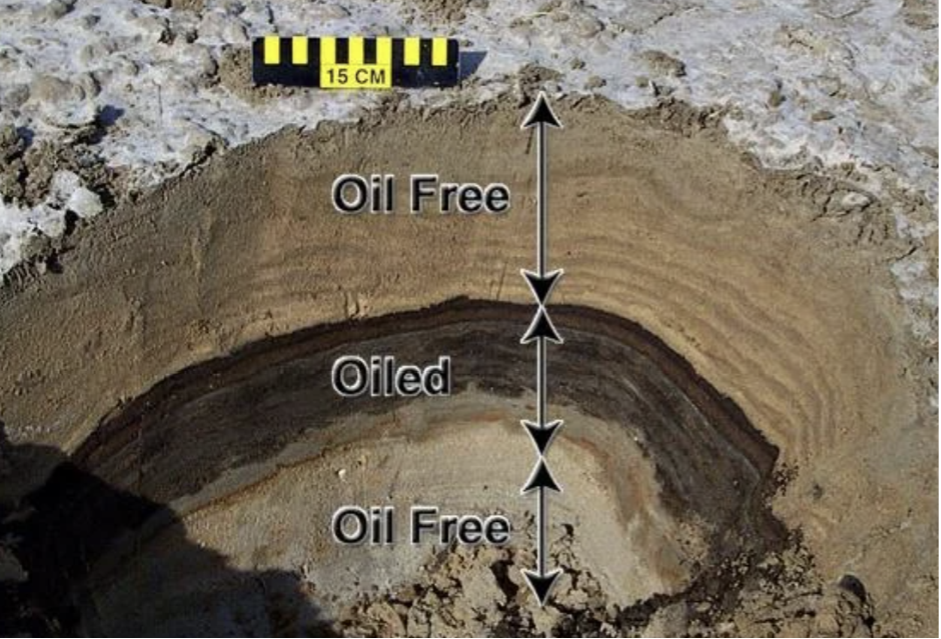
However, most of the oiled sediment was buried several centimeters deep between clean sediment layers as shown below: 


From Salem, M. & A. Hamid (2016) Stabilisation/solidification (S/S) technique and its application in Saudi Arabia. International Journal of Environment and Sustainability, vol 5, No. 1, pp 45-60.

The oil formed a continuous layer traversing all intertidal habitats regardless of biotopes: sand beach, tidal flat, salt marsh, or mangrove.  The Saudi Arabian shoreline, from north of Damman to the Kuwait border was still contaminated with an average thickness of the oil layer of approximately 10cm, amounting to a volume of 9 million cubic meters. 


These surveys revealed that 64% of mangroves, 70% of salt marshes, 88% of tidal flats, 90% of sand beaches and 90% of rocky shores remained impacted with lower diversity than that found in non-oil polluted control shores.  As a result, predicted recovery times were revised and extended to over a century for habitats such as salt marshes.[1]


In 2005  the UNCC awarded Saudi Arabia 1.1billion USD in for shoreline remediation works and other environmental damage claims, of which half was solely for shoreline environmental damages.  Other countries and individuals who lodged claims were also compensated.  It was the first time the United Nations had awarded monetary compensation related to claims for environmental damages as a result of war.  (https://uncc.un.org/en). The ongoing war in the Arabian Gulf may also have severe adverse impacts on the environment. Hopefully, the lessons learned on ecological restoration will be useful for the forthcoming recovery. I shall refer to these in some detail in my next article.


[1]
  Jones, DA. Hayes, M. Krupp, F. Sabatini, G. Watt, I. & Weishar, L. 2008  IN: Protecting the Gulf’s Marine Ecosystems from Pollution.  Edited by A.H. Abuzinada, H.-J. Barth, F. Krupp, B. Böer and T.Z. Al Abdessalaam

© 2008 Birkhäuser Verlag/Switzerland


Protecting habitats and biodiversity through effective impact avoidance

Current best-practice guidance on environmental management and impact assessment, such as CIEEM, (2016) and The Equator Principles is based on the ‘mitigation hierarchy’ – avoidance, mitigation and compensation of significant adverse impacts, followed when possible by ‘enhancement’. Avoidance of impacts is the preferred option to protect ecosystems, biological communities and biodiversity. In our previous article, we discussed some technical aspects of coral relocation, which corresponds to the third echelon of the mitigation hierarchy - compensation. This may be followed with specific measures or actions to increase the extent of habitats or biological diversity. 


Impact avoidance is the most effective and less costly way to protect the natural environment, as mitigation and compensation may not entirely deliver the expected results, and are often extremely expensive. It consists in making options that will not harm ecological features – ecosystems, habitats, species, especially those that are rare, sensitive or have been already affected by previous human actions or development. Impact avoidance must be considered at the earliest stage of any project, during its inception and concept design. This approach should be given the highest priority, as it will not only avoid lengthy and expensive studies and the implementation of costly measures for mitigation and compensation. It will also open opportunities for innovative design and nature-based solutions, which can be achieved with the participation of experienced and qualified environmental scientists during these early stages. A common error is to underestimate the potential adverse impacts of the construction and/or operation of a project during the initial design stages. This invariably leads to considerable delay and huge expenses during the later stages. We know about significant infrastructure projects that have been delayed for more than 12 years precisely for this mistake, compounded by unrealistic impact assessments not properly supported by evidence. Most members of EnvCR’s team have been involved in the later remediation of these shortfalls, after the developers realised that they had missed the window of opportunity to incorporate impact avoidance measures to their design. It is a common and expensive mistake. The best way to avoid this error is to seek expert professional advice during these early design stages, from qualified environmental scientists with the necessary level of experience. Failure to do this invariably results in years of delay, large bills and often, in adverse environmental effects as well. We shall discuss the mitigation and compensation measures in our next article.


Coral reefs: Conservation, protection, impact avoidance and mitigation.


Introduction


Dredging activities are now ubiquitous during coastal development projects. Coastal dredging is the underwater excavation and removal of sediment – mud, sand, gravel, etc. - from harbours, shipping lanes and coastal areas, to deepen waterways, facilitate navigation, manage coastline erosion, aggregates extraction and land reclamation projects.  

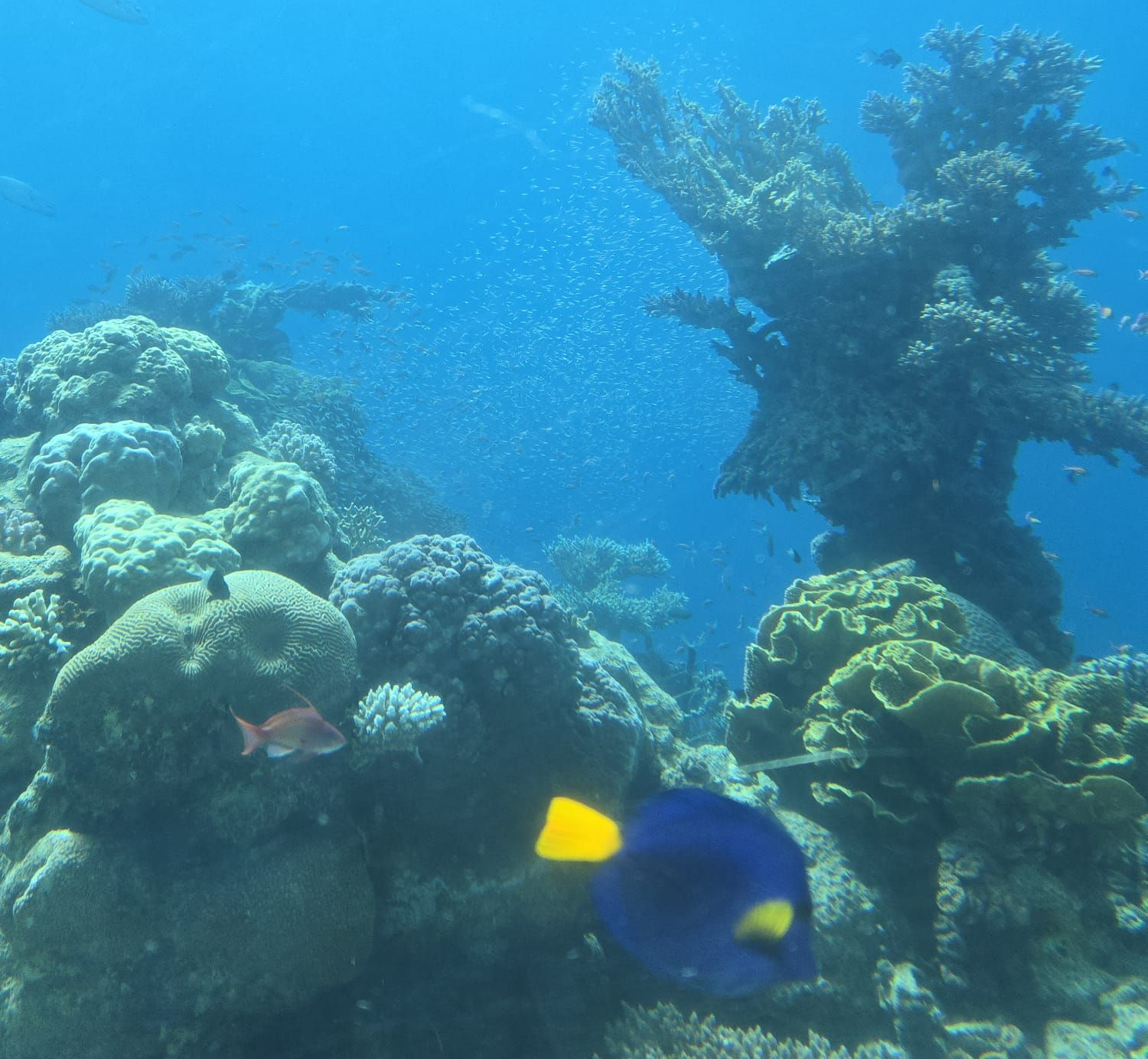
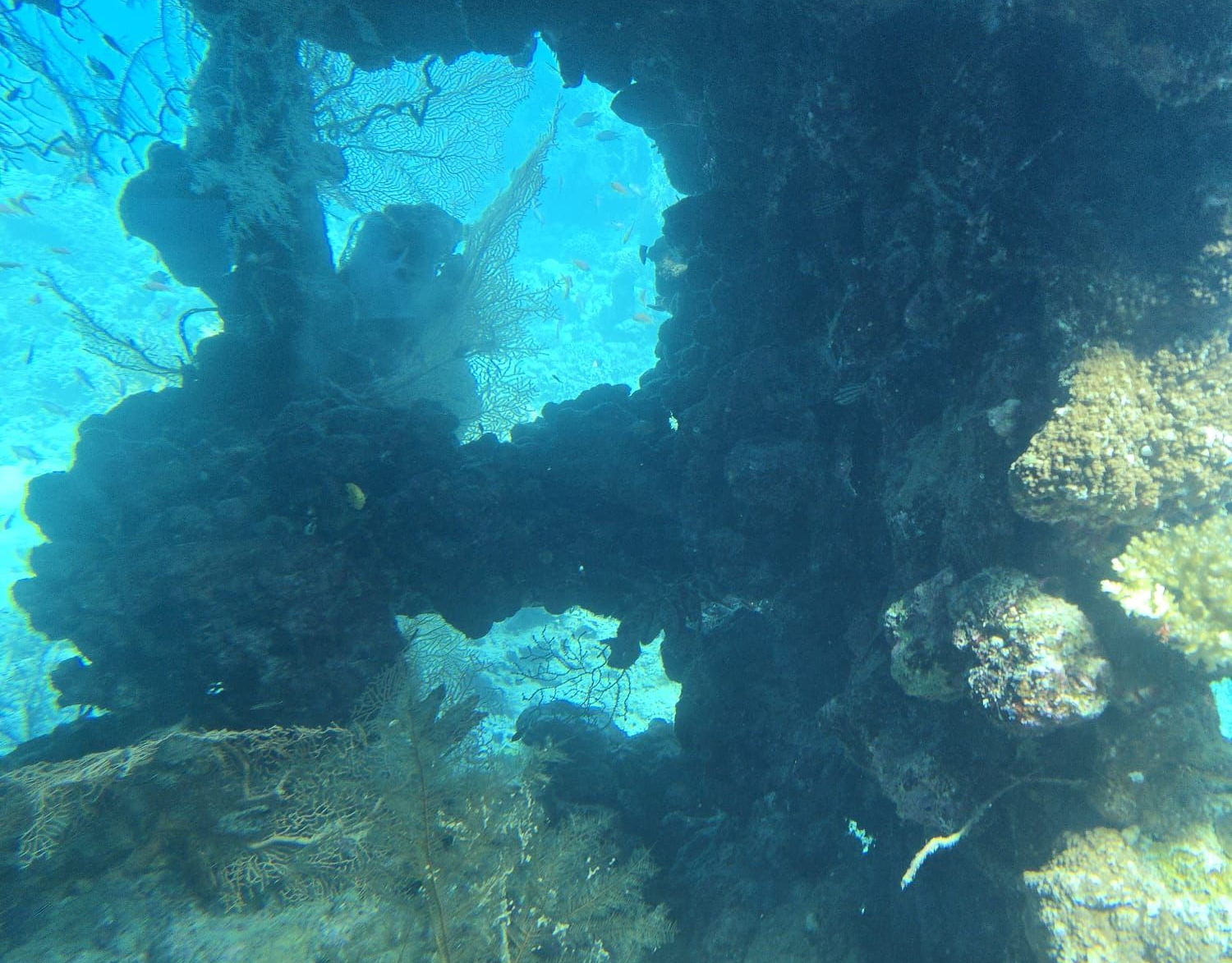
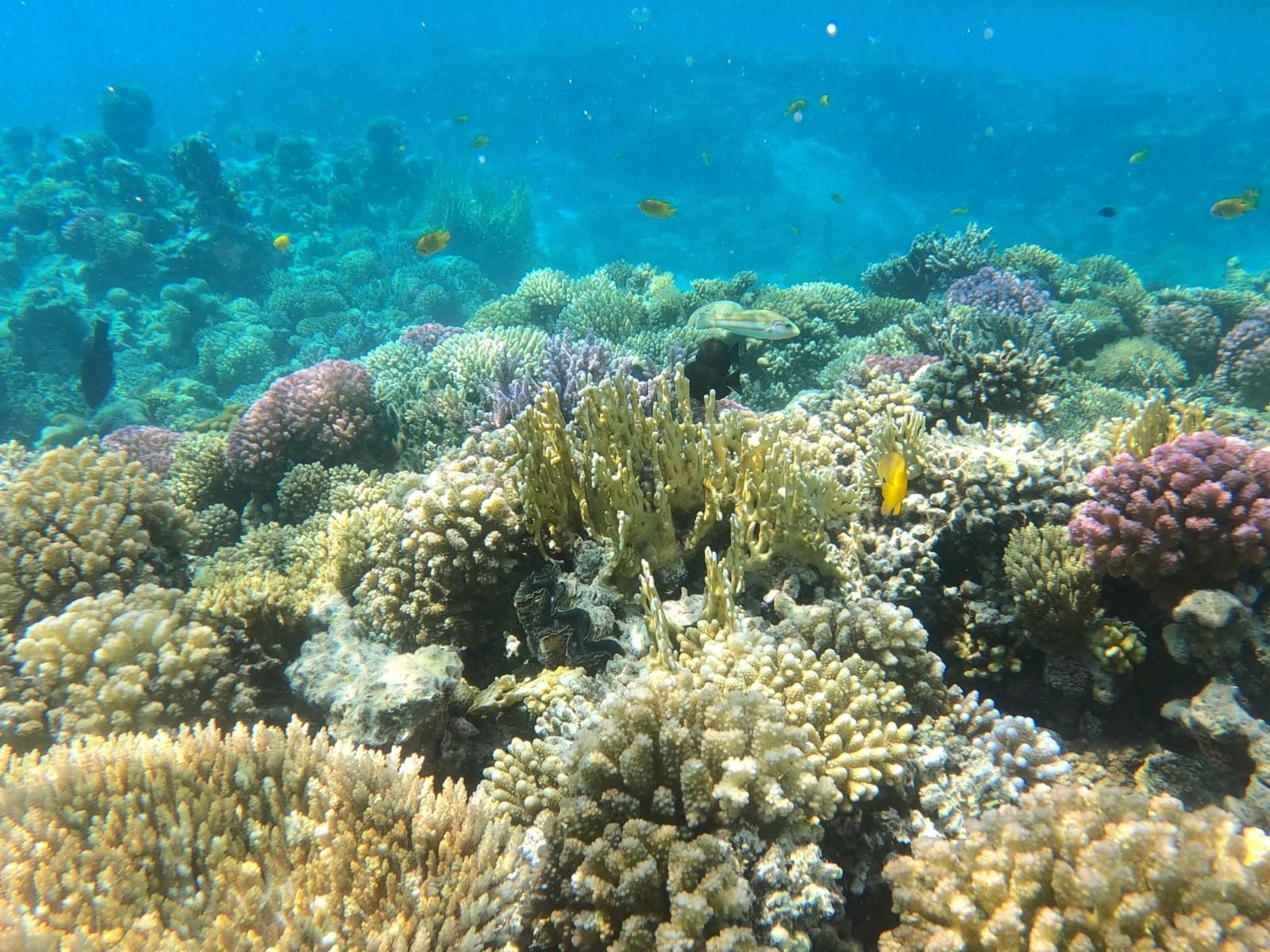
Coral reefs are usually found in shallow, warm, clear, and sunny tropical nutrient-poor waters, mostly between 30° - 35°N and 30° - 35°S latitude.  Due to their biodiversity, coral reefs have been described as the "rainforests of the sea"; despite covering less than 0.1% of the ocean's substrate, they provide a home (habitat) to over 25% of all marine species, including fish, invertebrates, and turtles.  Thus, because they are of great ecological and economic importance, it is imperative not to destroy these habitats during dredging activities.  Indeed, most countries implement a “no-net-habitat-loss” approach to their environmental criteria. 

Coral Relocation Methodology

The EnvCR team has successfully carried out many coral relocation projects in the Middle East and Africa for large-scale coastal infrastructure development projects. The following is a summary description of our coral relocation methodology framework ahead of implementing dredging activities.


Step 1 – Survey of Donor Area  


The donor area is the area that must be dredged and in which corals are found.  A survey is carried out by divers to identify “live” coral species (at least to genus level).  Once the total area is determined, a recipient site is identified in terms of similar depth and physico-chemical (temperature, salinity, light penetration) parameters.  The chosen recipient site will usually be located several km away from the donor site. 


Step 2 - Prepare Recipient Site 


Depending on size, substrate is often necessary to re-attach corals.  The type of substrate will often depend upon the size of coral to be relocated.  In the Arabian/Persian Gulf and the Red Sea, for example, coral heads are rarely larger than 1m in width, therefore these are detached and placed in baskets or attached to balloons to be moved to the recipient site (see photos below).

Substrate choice can be as simple as rebar; the same rebar as used for concrete. Other hard materials include concrete or rock.

Step 3- Detachment of Corals


Corals are detached using hammer and chisel, dependant upon coral head size, and placed in baskets for transportation to the recipient site.

Step 4 - Transfer of Corals


The transfer of corals is done underwater, or they can be placed on boats in water containers to be transported to the recipient site.  The amount of coral transported at any one time is dependant upon level of effort - area, or number of coral heads to be relocated). Cranes and buoys can also be used for transporting large coral heads.


Step 5 – Coral attachment


Coral re-attachment should mimic the natural conditions of the coral reef community from which they were removed, including soft corals. Sound understanding of coral reef ecology is essential to ensure that they are placed in assemblages with species they tolerate so as to minimise coral competition and stress.


Step 6 - Cleaning and Maintenance


Areas around the relocated corals will need to be cleaned regularly to avoid overgrowth by algae, especially for the first few weeks following re-attachment.  Frequency of cleaning will depend upon the time of year (during warmer months algal growth is generally increases), natural sedimentation rates, and nearby construction or dredging activities (if occurring).


Step 7 – Monitoring


This is important to ascertain the success of the coral relocation efforts.  The following parameters, at very least, should be monitored: 


         Coral survivorship (%)


         Coral Health (disease and bleaching occurrences)


Share

Habitat conservation, management and restoration: finding clarity in murky waters